 xero
Chhath Puja 2026: dates, arghya time and puja samagri list
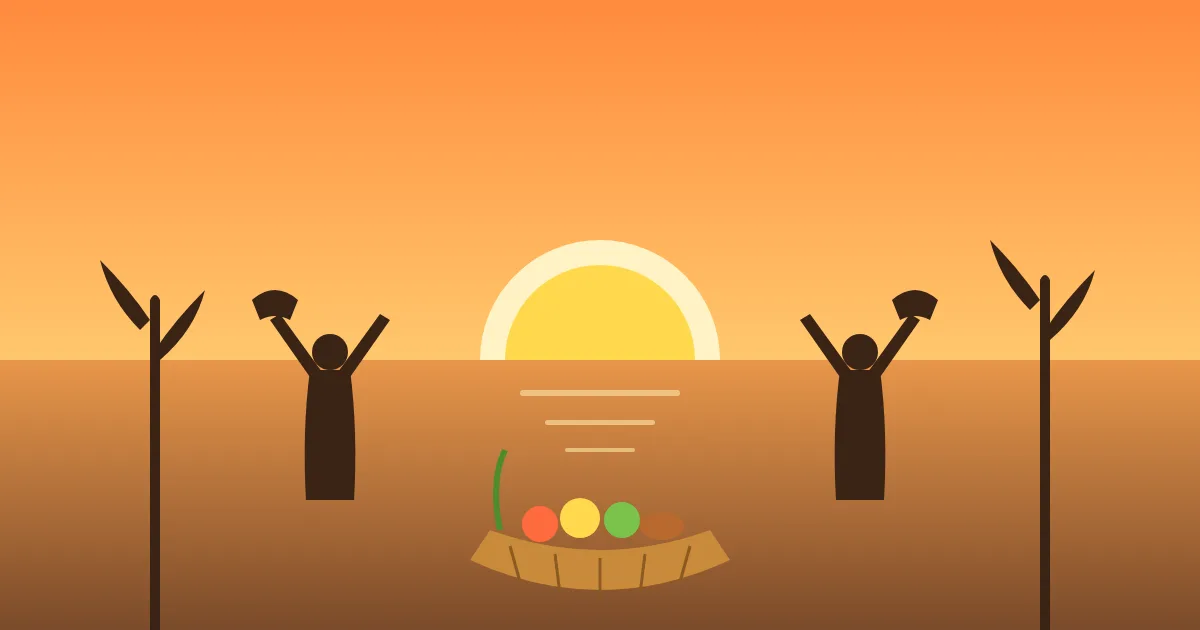
Chhath is the festival where people stand in rivers and ponds to thank the Sun, both when it sets and when it rises. It's the biggest festival of the year for families from Bihar, Jharkhand and eastern Uttar Pradesh, and today you'll see Chhath ghats from Delhi to Mumbai.
Chhath Puja 2026 in short
- Nahay Khay: Friday, 13 November
- Kharna: Saturday, 14 November
- Sandhya Arghya (evening): Sunday, 15 November
- Usha Arghya (morning) and parana: Monday, 16 November
What happens on each of the 4 days
Day 1 – Nahay Khay (13 November)
The vrati (the person keeping the fast) takes a holy bath, cleans the house and cooks a simple satvik meal, usually lauki (bottle gourd) with chana dal and rice, made with sendha namak and ghee. This is eaten once in the day.
Day 2 – Kharna (14 November)
The vrati fasts through the day. In the evening, after worship, they make gur ki kheer and roti on a clay chulha and eat it as prasad. From this moment the 36-hour nirjala fast begins: no food and no water.
Day 3 – Sandhya Arghya (15 November)
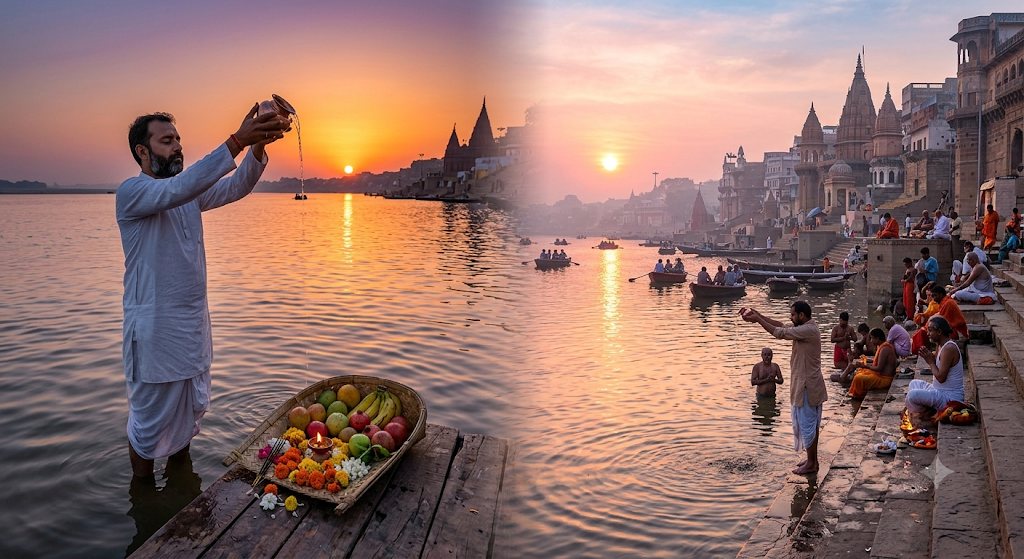
The family carries the decorated soop and daura, filled with thekua, fruits and sugarcane, to the ghat. Standing in the water, the vrati offers arghya to the setting sun. Many families sing Chhath geet late into the night.
Day 4 – Usha Arghya (16 November)
Before dawn everyone returns to the ghat. The vrati offers arghya to the rising sun, prays to Chhathi Maiya, and then breaks the fast with prasad. This is called parana.
Arghya time city-wise (approximate)
| City | Sandhya Arghya – sunset, 15 Nov | Usha Arghya – sunrise, 16 Nov |
|---|---|---|
| Patna | 5:00 PM | 6:07 AM |
| Gaya | 5:02 PM | 6:06 AM |
| Ranchi | 5:03 PM | 6:03 AM |
| Varanasi | 5:09 PM | 6:15 AM |
| Lucknow | 5:15 PM | 6:26 AM |
| Delhi | 5:27 PM | 6:44 AM |
| Kolkata | 4:52 PM | 5:49 AM |
| Mumbai | 5:59 PM | 6:46 AM |
Calculated sunset and sunrise times; they can differ by a few minutes at your ghat. Reach early and follow your local panchang or family pandit.
Chhath puja samagri list
| For the arghya | Fruits and prasad | Other items |
|---|---|---|
| Bamboo soop and daura (basket) Copper or brass lota Milk and Ganga jal |
Thekua Sugarcane (whole stalks) Coconut with water Banana bunch Big lemon (gagal) Sweet potato, singhara, seasonal fruits |
Diya, ghee, cotton wicks Sindoor, rice, flowers New clothes for the vrati Turmeric and ginger plants Agarbatti, kalash |
Thekua, the special prasad
Thekua is a crunchy sweet made from wheat flour, jaggery and ghee. The dough is pressed into a wooden mould for the pattern and fried until golden. It's made at home with great care, and it keeps well for days, which is why it travels to relatives far away after Chhath.
Health and ghat safety for vratis
A 36-hour fast without water is hard on the body, especially in cold weather.
- Vratis with diabetes, heart or kidney problems, pregnant women and elderly people should talk to their doctor before keeping a nirjala fast.
- Eat a balanced meal on Nahay Khay and Kharna, and avoid very salty or oily food.
- If a vrati feels dizzy, confused, has chest pain or faints, take them out of the water and get medical help. Health comes first.
- Keep children away from deep water and crowded edges. Choose ghats with barricades and lifeguards where possible.
- Carry a warm shawl for the early morning arghya, and keep wet clothes changed quickly.
- In cities where the air is bad, an N95 mask helps on the way to the ghat. Check today's AQI in our AQI guide.
The story behind Chhath
Chhath is one of the oldest ways of worshipping the Sun still followed in India. There is no idol at the centre of it, and no priest is needed. The vrati stands in the water and speaks to the Sun directly, holding a soop full of fruit grown in the same season. That simplicity is a big reason the festival feels so personal to families from Bihar and Purvanchal.
Many stories are told about where it began. In one popular telling, Sita kept the Chhath fast after returning to Ayodhya with Rama. In another, Karna, the son of Surya in the Mahabharata, offered water to the Sun every day while standing in a river, and Draupadi is said to have kept the fast for her family's well-being. Families pass these stories down, and each household has its own version.
Why the setting sun is worshipped too
Most prayers to the Sun happen at sunrise. Chhath is special because the evening arghya comes first. The idea people share is simple and beautiful: you thank the Sun for the day that is ending before you ask for the day that is beginning. Gratitude comes before wishes.
Chhathi Maiya, worshipped alongside Surya Dev, is believed to protect children and bless families. That is why many vratis keep the fast for their children's health, and why the whole family, including young children, comes to the ghat.
The songs that make it Chhath
Ask anyone from Bihar what Chhath sounds like, and they will start humming. Traditional Chhath geet are sung while preparing thekua, while walking to the ghat, and while waiting for the sun to rise. The late Sharda Sinha's Chhath songs are played in almost every home during these four days, and for many people working far away, hearing them is what makes them book a ticket home.
Chhath far from home
Railway stations in Delhi, Mumbai, Surat and Kolkata fill up in the week before Chhath, as millions travel home. Those who cannot go home bring the festival with them. In Delhi, ghats are set up along the Yamuna and in parks, and housing societies in many cities build small water tanks so that vratis can offer arghya close to home.
If you are celebrating in a city for the first time, ask the local community or your building association where the nearest ghat is being prepared, and reach early. Crowds peak about an hour before sunset.
A cleaner, greener Chhath
- Use clay diyas and bamboo soop instead of plastic baskets and plastic decorations.
- Carry offerings in cloth bags and take any leftover packaging back home.
- Do not leave flowers, plastic or foil in the river. Many ghats keep separate bins for puja waste.
- Where river water is not safe, an artificial pond in your colony is a perfectly good choice.
Questions people ask
Chhath Puja 2026 kab hai?
Chhath Puja 2026 starts with Nahay Khay on Friday, 13 November. Kharna is on Saturday, 14 November, Sandhya Arghya on Sunday, 15 November, and Usha Arghya on Monday, 16 November, as per most panchangs.
What time is Sandhya Arghya on 15 November 2026?
Sandhya Arghya is given at sunset. On 15 November 2026 sunset is around 5:00 PM in Patna, 5:03 PM in Ranchi, 5:09 PM in Varanasi, 5:15 PM in Lucknow and 5:27 PM in Delhi.
What time is Usha Arghya on 16 November 2026?
Usha Arghya is given at sunrise. On 16 November 2026 sunrise is around 6:07 AM in Patna, 6:03 AM in Ranchi, 6:15 AM in Varanasi, 6:26 AM in Lucknow and 6:44 AM in Delhi.
Why is the Chhath fast called nirjala?
After the Kharna prasad on the second evening, vratis keep a fast without food or even water for about 36 hours, until the morning arghya on the fourth day.
Which sun god and goddess are worshipped in Chhath?
Chhath is dedicated to Surya Dev, the Sun God, and Chhathi Maiya. It is one of the few festivals where both the setting and the rising sun are worshipped.

Written by Anthony Paul JosephFounder of Xeropen. B.E. Computer Science (RTMNU), content writer and digital marketer since 2021. More about me
Share with your family group
Dates, arghya timings and samagri list – everything in one link.
Also read: Children's Day 2026 speech and 10 lines · AQI guide after Diwali