 xero
Latest – 9 November 2026, the morning after Diwali: Delhi's AQI was 366 at 6:15 AM ("very poor"), with 15 monitoring stations in the "severe" zone, as per CPCB's Sameer app. The 24-hour average on Diwali day was 376 – Delhi's most polluted Diwali in five years. GRAP Stage III restrictions have been in force across Delhi-NCR since 6 November.
Every year the air gets worse in the days around Diwali. Crackers add smoke on top of winter fog, stubble burning and traffic, and the AQI in many north Indian cities jumps into the "very poor" or "severe" range. This year Delhi's 24-hour average AQI reached 377 on 5 November, its worst reading in 288 days, and that was before Diwali night.
Here's what those numbers mean for your body, and what actually helps.
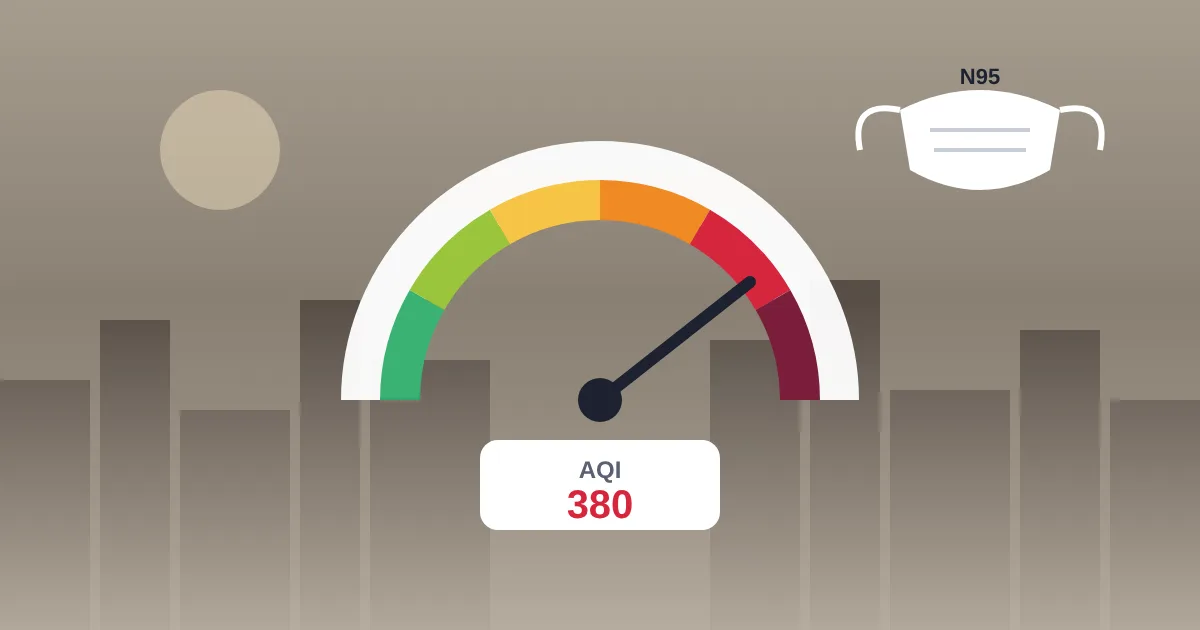
Why does my app show AQI 700 or even 1700?
Many people saw numbers like 663 or 1,700 on their phones last night and panicked. Here's what's going on:
- India's official AQI (CPCB) stops at 500. Anything above 400 is simply "severe". So the government number can never show 1,700.
- Some private apps and websites don't cap the scale. They keep counting above 500, use other countries' formulas, or show one sensor's reading at its worst minute.
- Hourly peaks vs daily average. An app may show a 1 AM spike right after fireworks, while CPCB's daily figure is a 24-hour average.
What it means for you: whether your app says 450 or 1,700, treat it the same way – it's severe air. Stay indoors as much as possible, wear an N95 outside and keep children and elderly people protected.
India's AQI scale, in plain words
| AQI | Level | What it means |
|---|---|---|
| 0–50 | Good | Clean air. Go out freely. |
| 51–100 | Satisfactory | Fine for most. Very sensitive people may feel slight discomfort. |
| 101–200 | Moderate | People with asthma, lung or heart disease may start feeling it. |
| 201–300 | Poor | Breathing discomfort for most people on long exposure. |
| 301–400 | Very poor | Breathing problems on long exposure. Avoid time outdoors. |
| 401–500 | Severe | Affects healthy people too. Serious for anyone with lung or heart disease. |
Based on the National Air Quality Index used by the Central Pollution Control Board (CPCB).
Why AQI matters: the PM2.5 problem
The biggest worry in winter smog is PM2.5: particles smaller than 2.5 micrometres, about 30 times thinner than a hair. They are small enough to go deep into the lungs and even reach the bloodstream. That's why bad air doesn't only cause coughing. It can trigger asthma attacks, worsen COPD, and put extra strain on the heart.
Who needs to be most careful
- Children: they breathe faster and their lungs are still growing.
- Older people, especially those with heart disease.
- People with asthma, COPD or bronchitis.
- Pregnant women.
- People who work outdoors: traffic police, delivery riders, construction workers, street vendors.
10 things that actually help
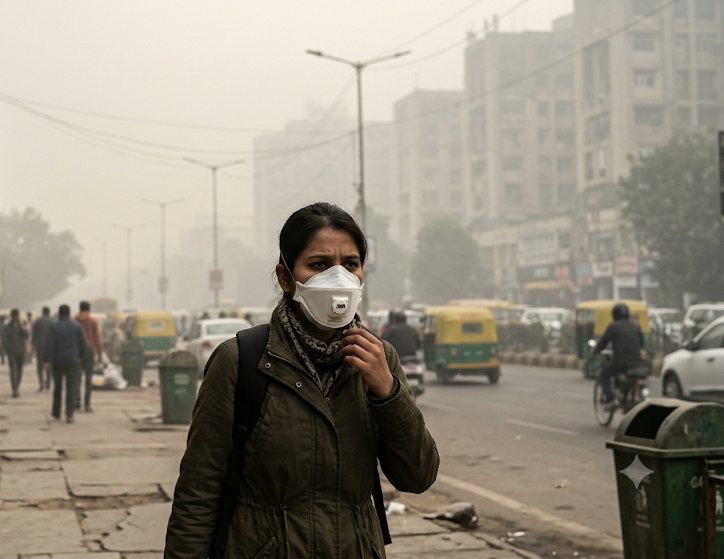
- Wear an N95 or FFP2 mask outside, fitted snugly over the nose. Cloth and surgical masks let most fine particles through.
- Skip outdoor exercise on Poor, Very poor and Severe days. Walk or work out indoors.
- Avoid early morning walks. Smog often sits close to the ground in winter mornings.
- Keep windows shut during peak smog hours. Air the house briefly when the AQI drops, often in the afternoon.
- Use an air purifier with a HEPA filter in the room where you sleep, if you can. Keep doors closed so it can work.
- Cut indoor smoke too: no agarbatti, dhoop, mosquito coils or smoking indoors on bad days.
- Mop instead of sweeping, so dust doesn't fly back into the air.
- Drink enough water to keep your throat and airways moist.
- Keep inhalers and medicines ready if anyone at home has asthma, COPD or heart disease. Don't skip regular doses.
- Check AQI daily before planning time outside, especially for children and elderly family members.
See a doctor quickly if you notice: breathlessness that doesn't settle with rest, chest pain or tightness, wheezing that doesn't improve with the usual inhaler, lips turning bluish, or a child breathing very fast. In an emergency, call 112 or go to the nearest hospital.
Common myths about pollution
Questions people are asking
Why does my AQI app show more than 500?
India's official AQI stops at 500. Private apps may use an uncapped or foreign scale, or show short spikes. Above 400 on any app, treat the air as severe.
What does AQI 400 mean?
301–400 is Very poor and 401–500 is Severe. Most people feel breathing discomfort on long exposure, and people with lung or heart disease are affected more. Stay indoors as much as you can and wear an N95 outside.
Does a surgical mask protect from pollution?
Only a little. Surgical and cloth masks let most PM2.5 through. A well-fitted N95 or FFP2 is much better.
Is it safe to go for a morning walk when AQI is high?
On Poor or worse days, skip it. Winter mornings often trap smog near the ground. Exercise indoors instead.
Should schools close when AQI is severe?
That decision is taken by state governments and local authorities. Follow their announcements. At home, keep children indoors on severe days.
Which air purifier should I buy?
Look for a true HEPA filter and a CADR (clean air delivery rate) that matches your room size. Replace the filter as the maker recommends.

Written by Anthony Paul JosephFounder of Xeropen. B.E. Computer Science (RTMNU), content writer and digital marketer since 2021. More about me
Share this with your family group
One link that explains today's AQI to everyone at home, especially parents and grandparents.
This is general health information, not a substitute for medical advice. If you have symptoms or a health condition, talk to your doctor.
Also read: Chhath Puja 2026: health and ghat safety · Children's Day 2026 · First aid for firecracker burns